 |
 |
 |
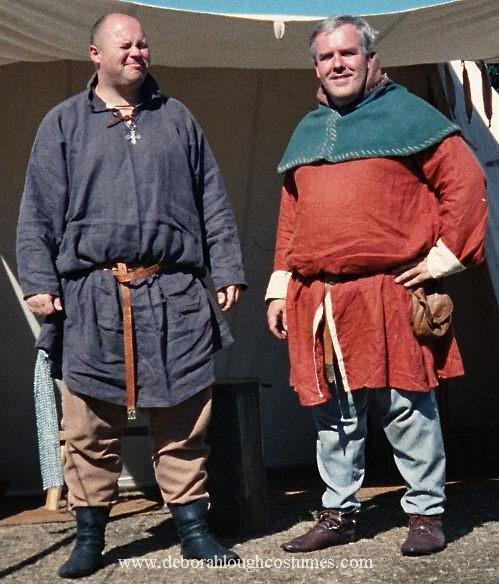
| The picture on the right shows two sets of men's clothing of roughly the 12th century, made for members of Conquest. Each set consists of a tunic, hosen and braies, all in linen. The tunic on the far left is unsplit and has a short collar. You can see the same tunic from a different angle in the picture to the right. The tunic on the near left is split at the back and front, and has cream edging (also linen) at the split, cuffs and (unseen) neckline. Both outfits are hand finished. |
 |
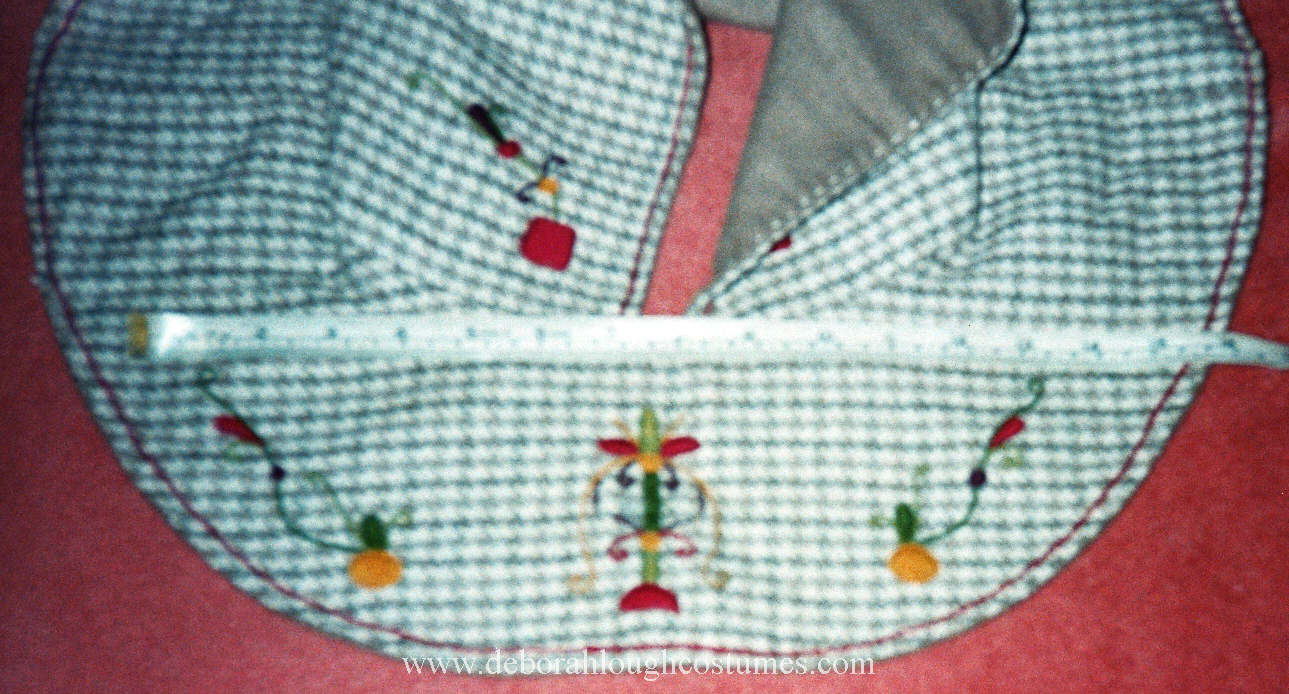
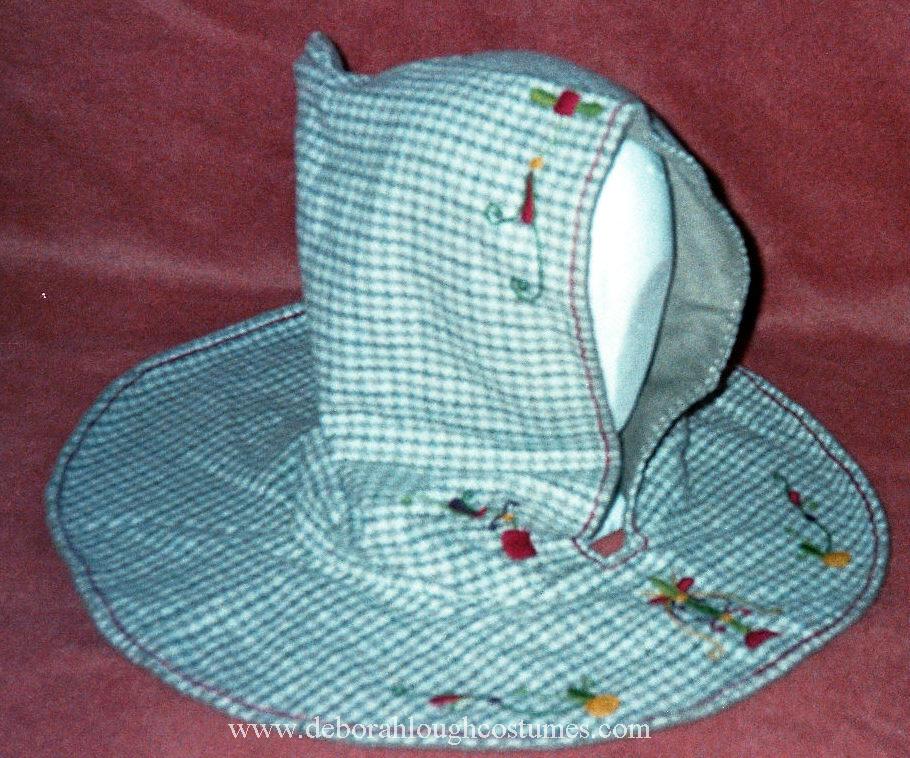
| A hood made in a dogtooth check wool, and lined with plain wool. The hood is embellished with hand embroidered motifs, all of which are taken from the edging sections at the top and bottom of the Bayeux Tapestry (which is actually an embroidery). The hood is completed by chain stitch, worked at all of the edges. The embroidery is carried out in very fine naturally dyed welsh wool. Two of these hoods exist - the only difference being that I used slightly different colours for the embroidery. See below for a plain hood made in the same fabrics. For close-ups of the embroidery, go to the Embroidery Gallery. |
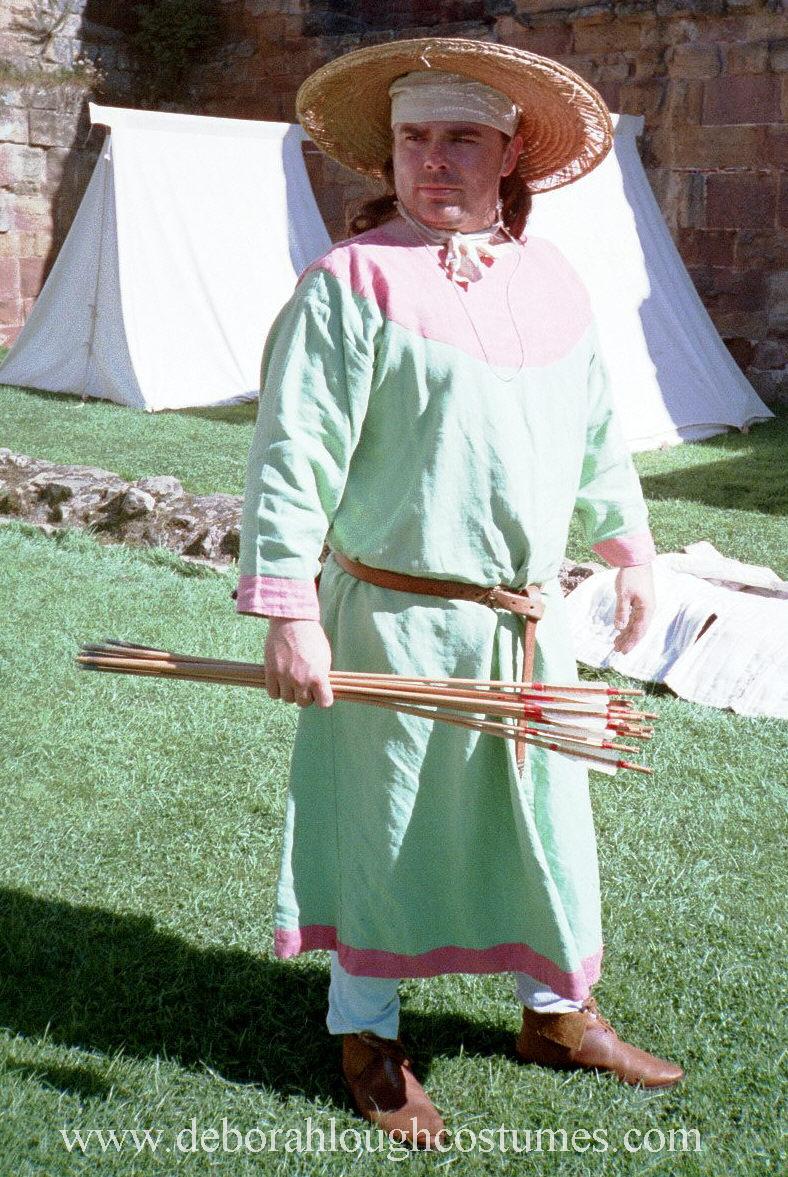
| An unsplit 12th century tunic, again, made for a member of the Anglo Norman living history society, Conquest. The skirt of this linen tunic has been widened by the insertion of gores (godets), and it is trimmed with light pink linen at the hem, cuffs and neckline. The tunic is hand finished. |
| This is me(!) in a 11th - 12th century Norman dress, chemise and veil. The dress is in dark green wool (which was quite an expensive colour in medieval times). There is a small panel of embroidery at the front of the neckline. The sleeves and skirt of the dress are quite short, so that the chemise can be seen. The chemise is in a paler green colour, and is full length. The sleeves are very long and tight, and are pushed back above the wrist to give the wrinkled look that was characteristic of the style. The yellow panel at the bottom of the chemise is a separate piece, which can be removed and replaced when it becomes worn from constantly brushing the ground. This outfit was completely hand sewn. The dresses are worn with a belt by Mark Beabey, of Bjarni's Boots. (Apologies for the poor quality of this picture.) PS - my hems are even - in the picture I'm standing at a strange angle on uneven ground, so they look wonky! |
| This is a garment from the 13th and 14th centuries known as a 'herigaut'. It was basically a sort of medieval overcoat that was pulled on over the head. The coat has an attached hood, and over-long sleeves which have slits at the forearm and upper arm, so that the sleeve can be worn as a proper sleeve or a hanging sleeve (see below). As this particular herigaut was made in a quite heavily felted wool, the edges were left raw. |
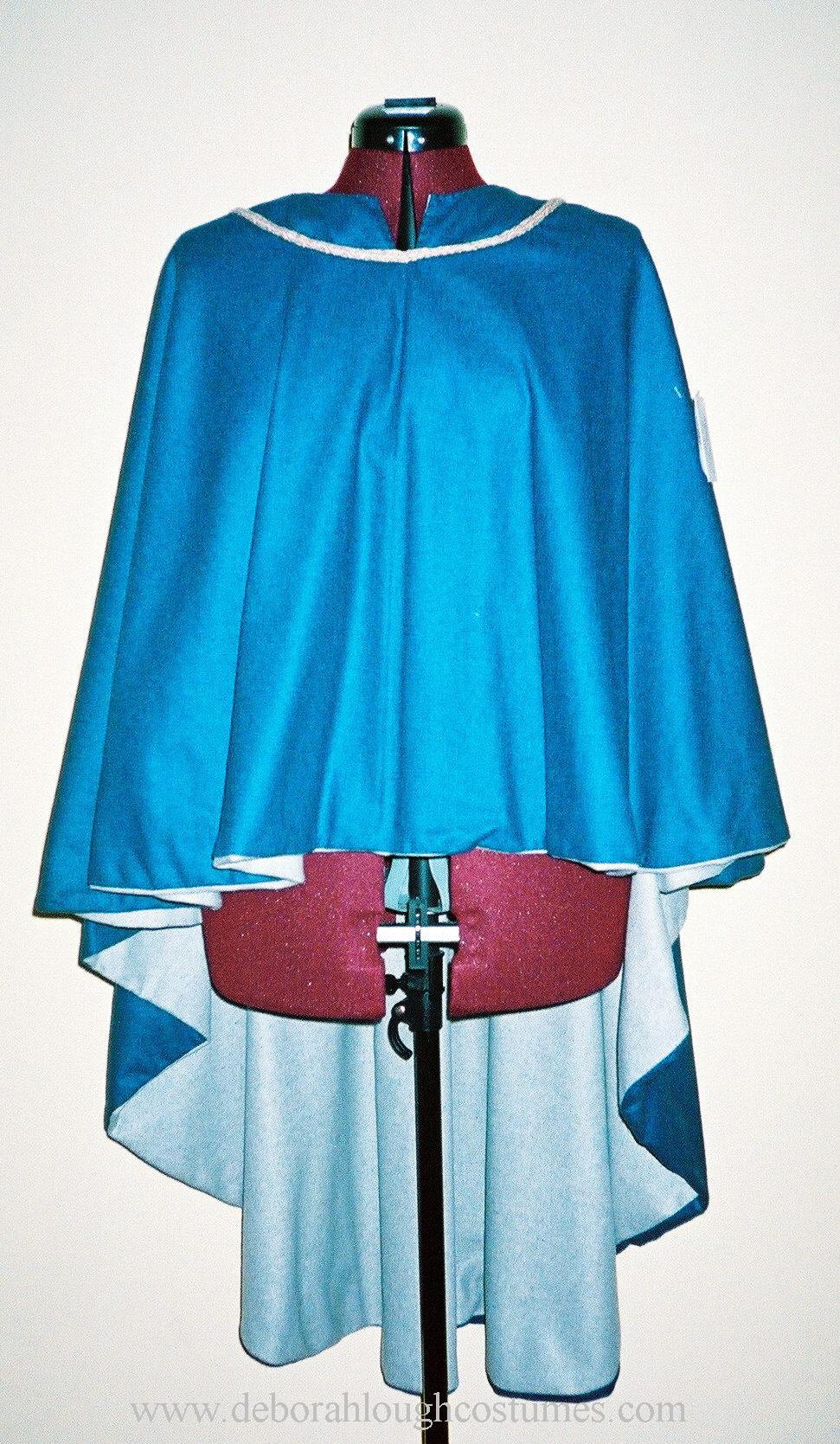
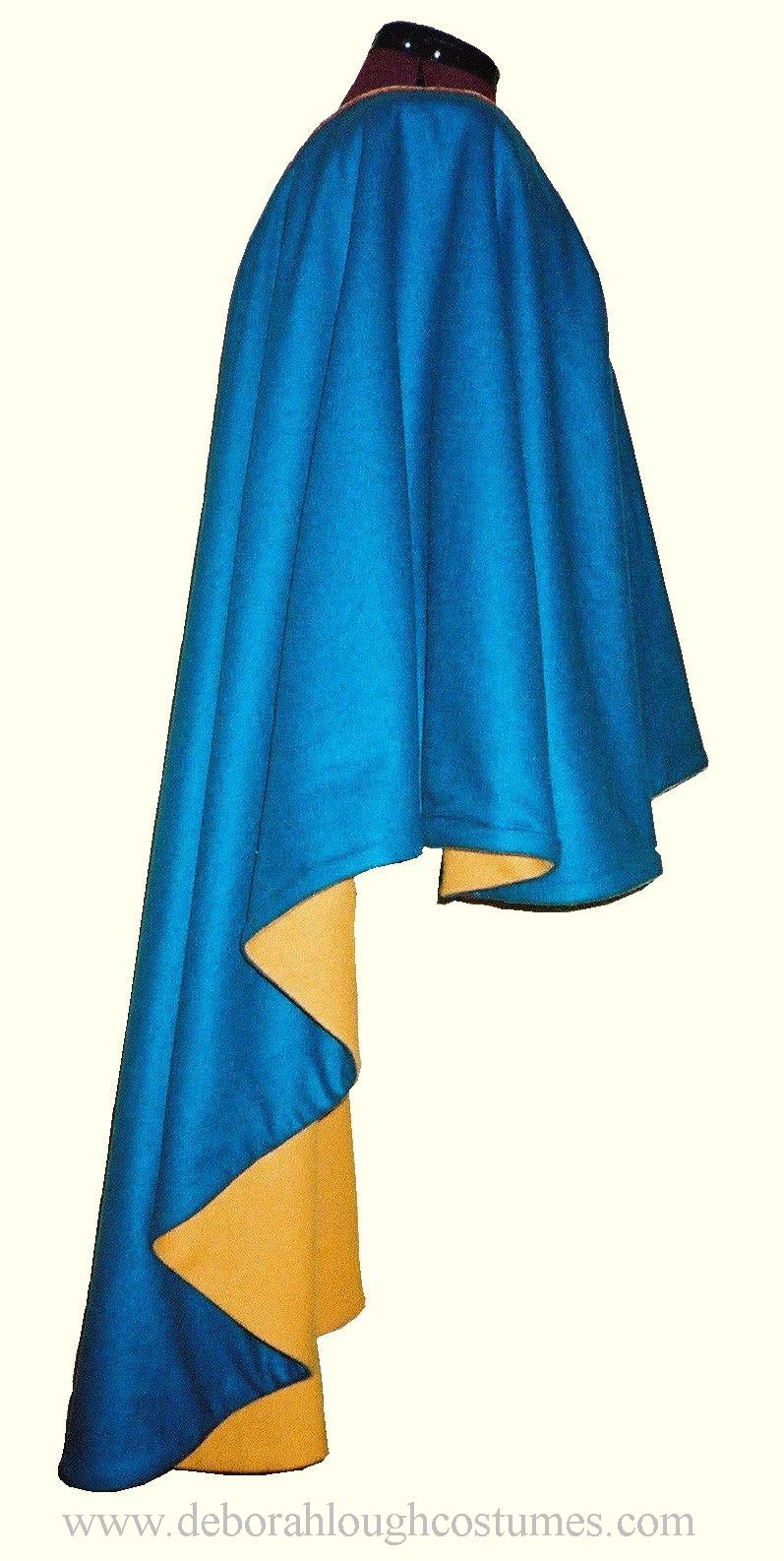
| Two early medieval women's mantles (an alternative to the cloak). Both of these are made and lined in wool, and trimmed with hand made tablet braid, by Steve 'the Weave'. |
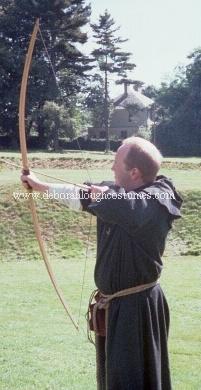
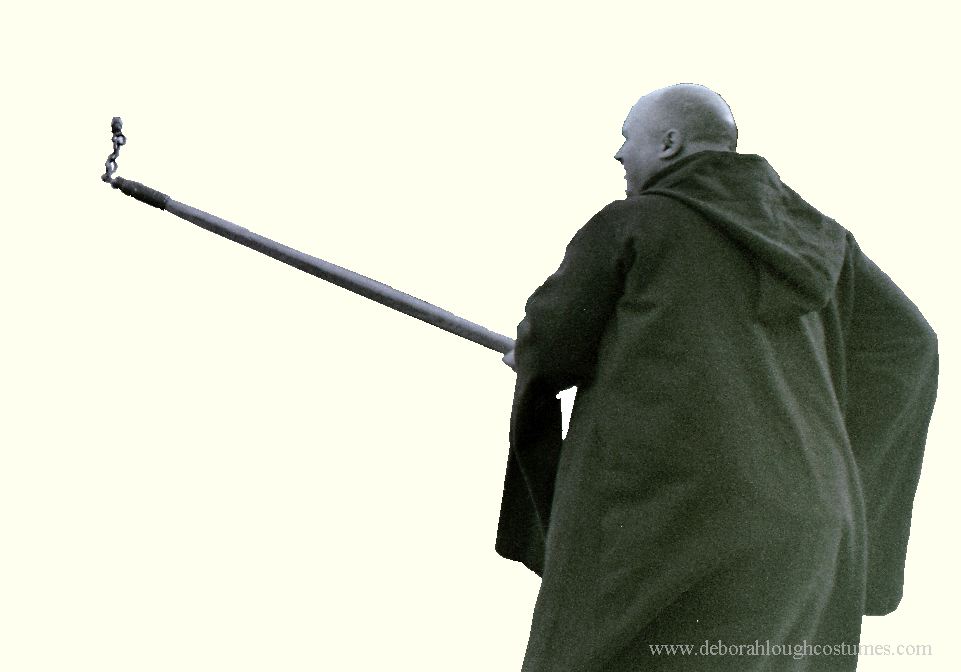
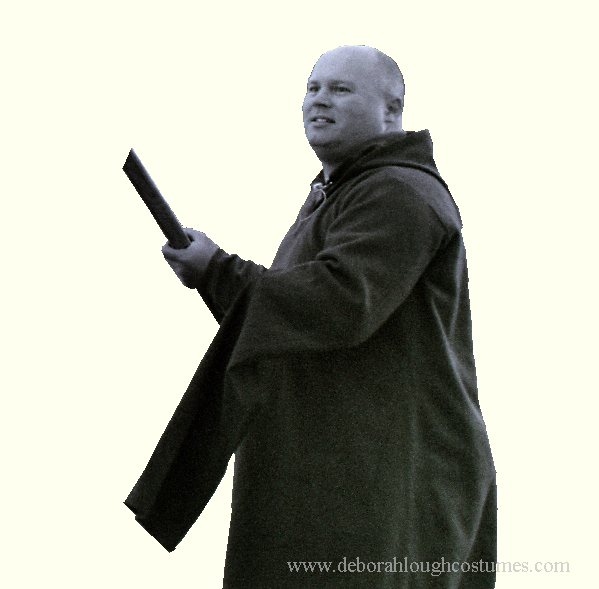
| A 12th century monk practising his archery! This habit and caul (hood) were made for a member of Conquest. The woollen fabric, by Abimelech Hainsworth, was neither lined nor hemmed. All edges were left raw, and the seam ends reinforced. |
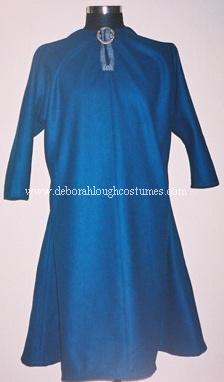
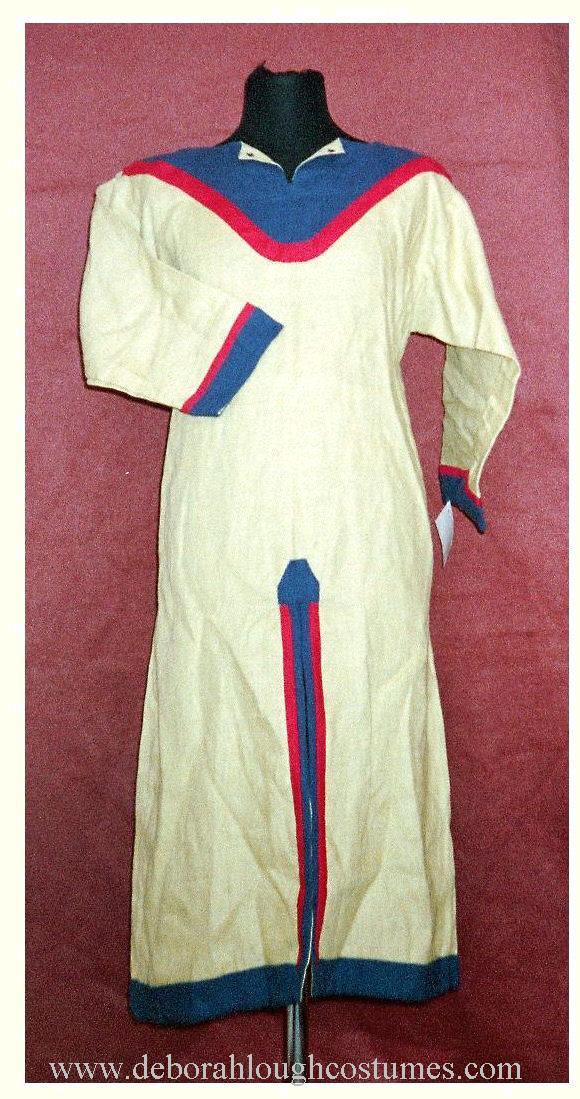
| Two more tunics. The tunic to the left is made in linen. It is split at the back and the front, and the hem, splits, cuffs and neckline are decorated with contrasts of blue and red linen. The keyhole neckline has a hole either side to allow the tunic to be worn with a brooch, without damaging the fabric. The tunic to the right is made of wool. It is unsplit, and the neckline is very simply decorated with a very small amount of hand made woollen tablet weave, by Tanya, of Tanya's Tablet Weave. This tunic also has hand made eyelet holes at the neckline to allow the use of a brooch (as pictured). Both tunics are hand finished. |
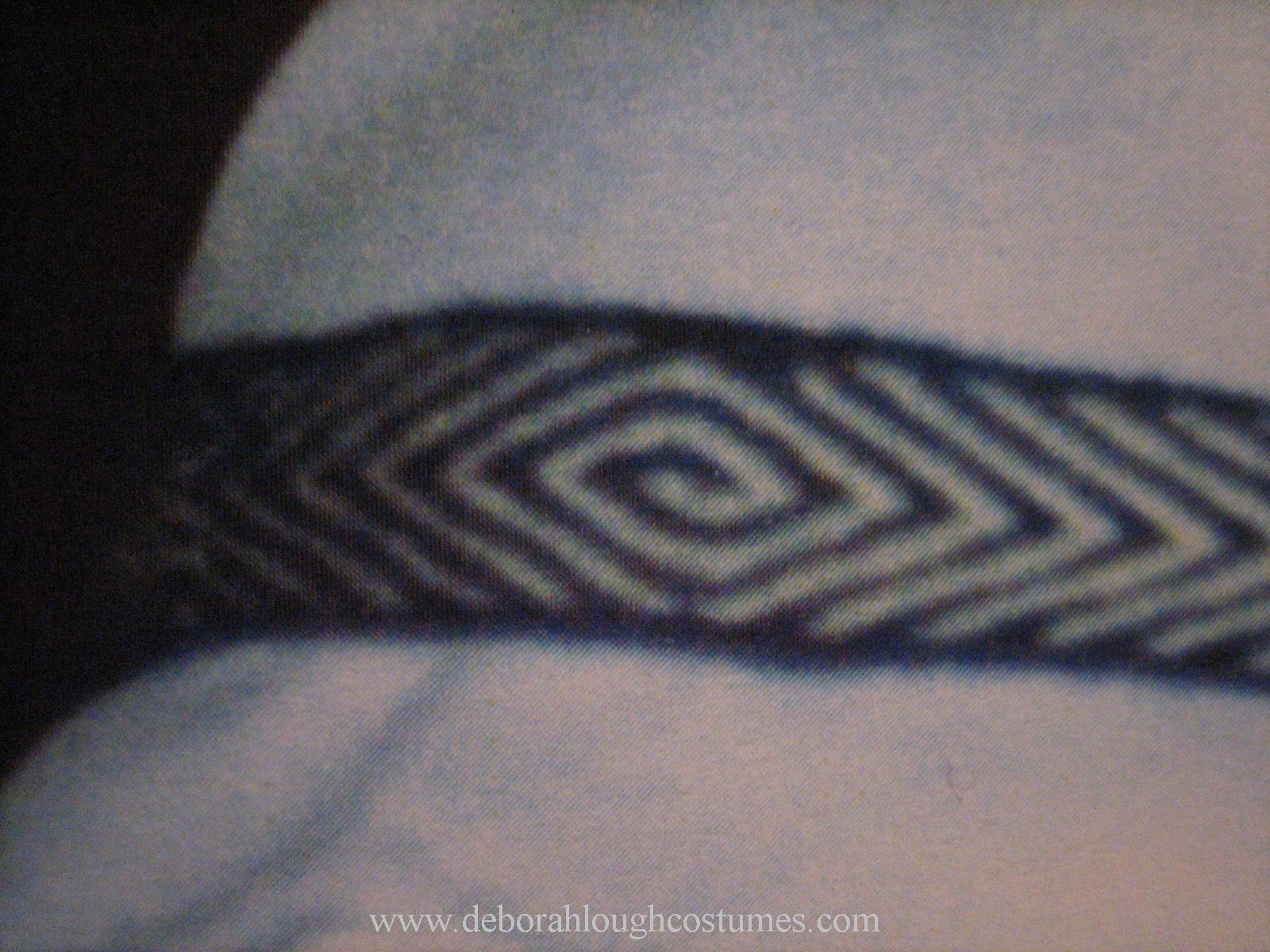
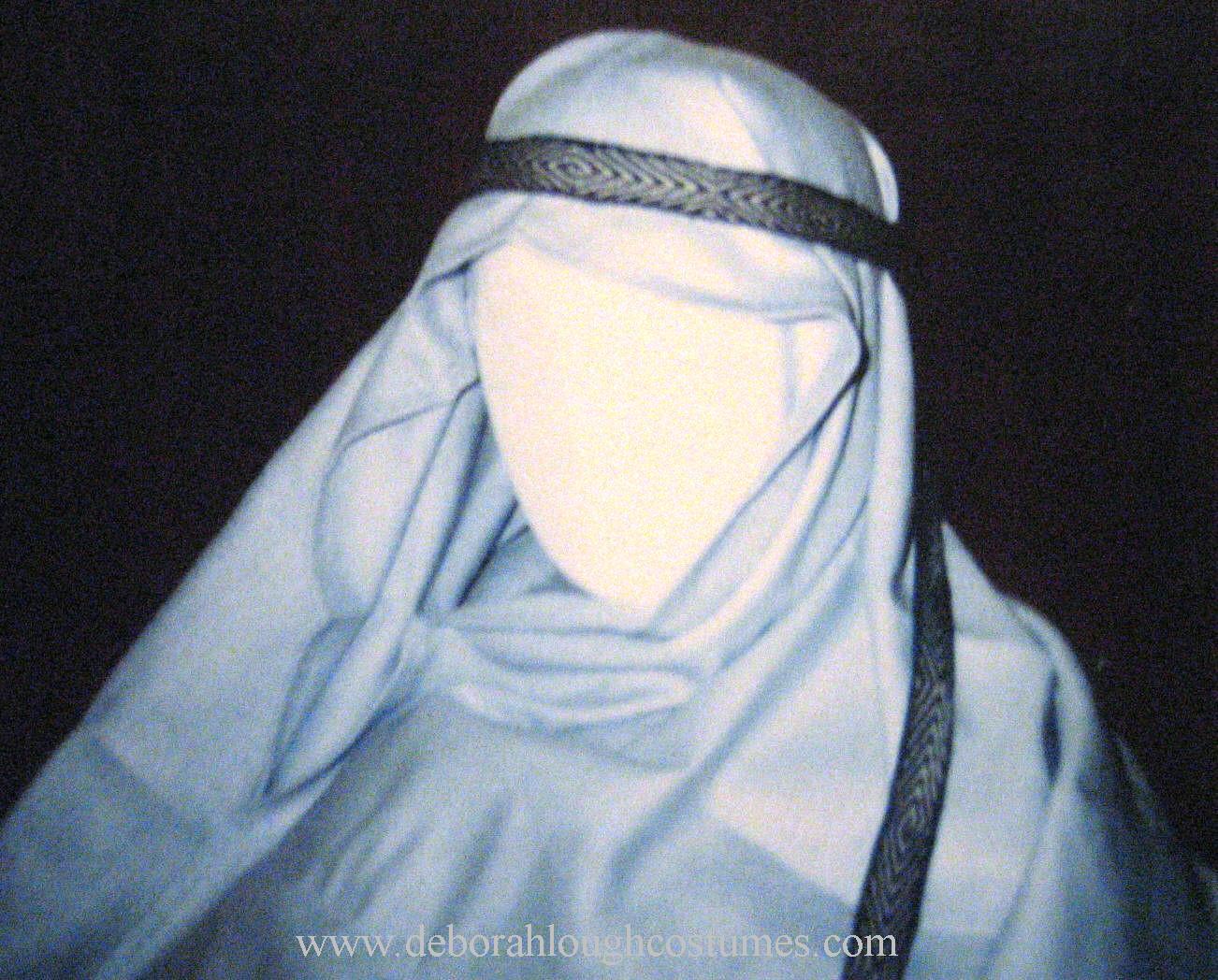
| A hand sewn linen veil. The hand made woollen tablet braid is by Tanya (as before). |
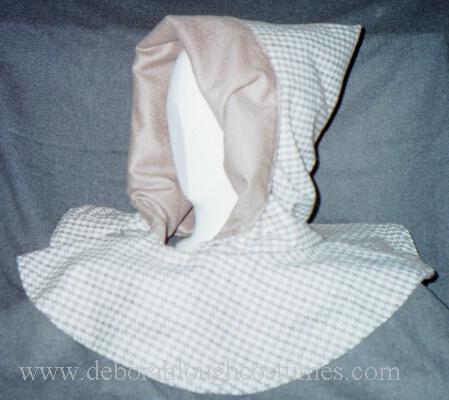
| And finally! A medieval hood, made in the same fabrics as the embroidered one shown above, but plain. Hand finished |
 |

 |
 |
 |
 |
 |
 |
 |
 |

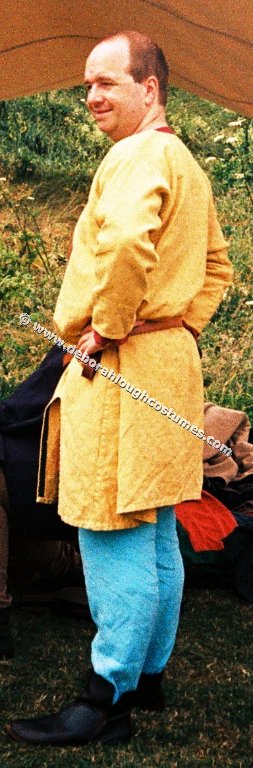
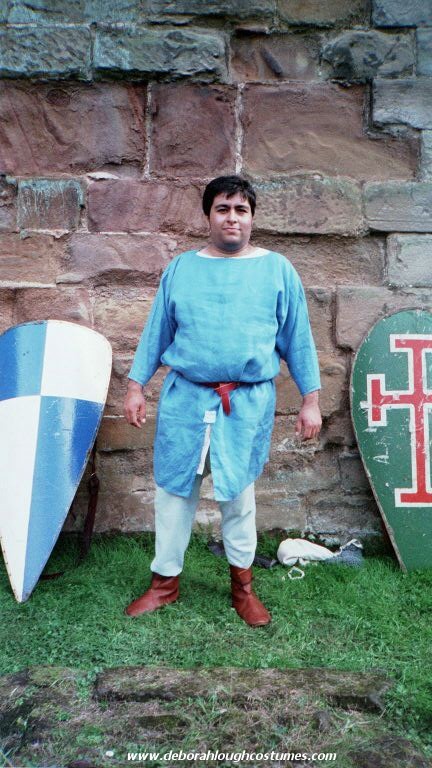
| A tunic with an interesting difference from the more usual versions that tend to be either unsplit, or split at back and front. This one, based on a contemporary manuscript illustration of an archer, has a single split over the left thigh. It's interesting that this is the leg that an average archer would present at the front of his body when shooting. Also forming part of this outfit is a pair of light blue footed linen hosen. Both tunic and hosen are hand finished. |
 |
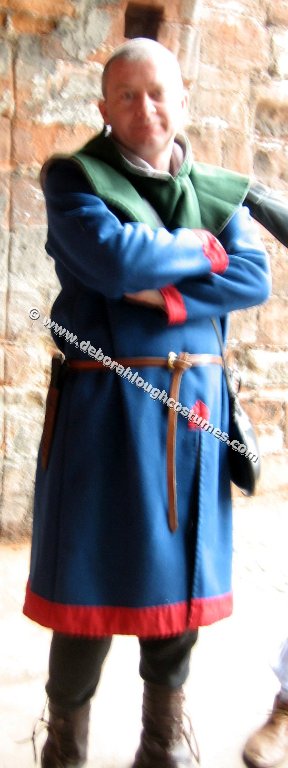
| A middle class Norman outfit, consisting of a blue woollen tunic trimmed in red linen, single legged hosen, braies and shirt (unseen, obviously), and a hood in green wool. |
 |
| Another middle class Norman outfit, this time entirely in linen. A tunic, shirt, and hose and braies |
 |