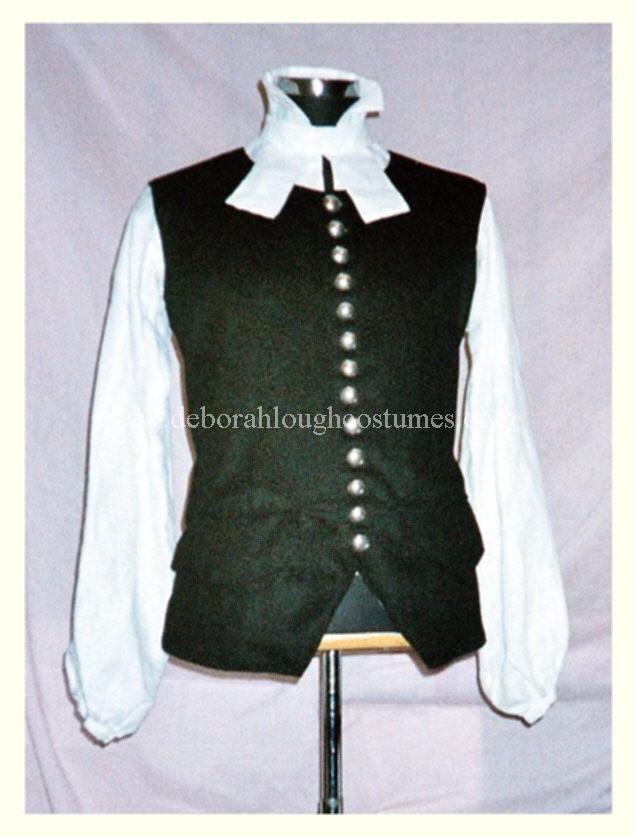
| The linens consist of a shirt with handmade buttons, a cravat (top right), and a type of tie often worn by the clergy, and some professionals, and still used today by some lawyers (right). All of these items were hand finished, and are quite plain, to fit in with the man being portrayed. After researching and beginning the construction, we happened to walk past the statue of Joseph Priestley in Leeds city centre, and interestingly, the outfit he is wearing is almost exactly the same as the one I've made! |




 |
 |
| First in my 18th century gallery, we have a set of small clothes (waistcoat and breeches) and linens, made for an actor portraying Joseph Priestley, to go with a frock coat which I also made, but of which I have no picture. The waist coat fastens at the front by means of a large number of domed polished pewter buttons, and has a slit in the false linen back (shown left), with ties, to allow a closer fit. The waistcoat has fully functioning pockets, cut in a manner that can be found on many 18th century survivals. As the suit is dated to the middle of the century, the breeches have a fly, rather than a fall front, and they button at the knee. |
 |
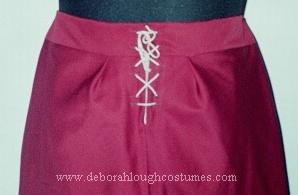
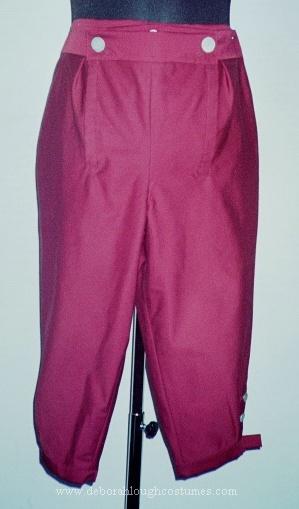
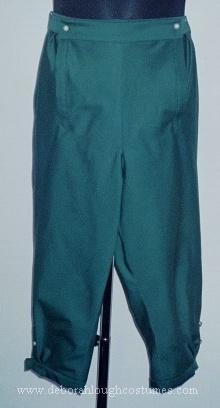
| Two pairs of later 18th century breeches (the fall front puts them at sometime after 1760 or so). Both have button flies, button and buckle fastening knees, and lacing at the centre back. The more eagle eyed may notice that the fabric is incorrect (actually a polycotton) - this was at the insistence of the client. Made for the Royal Armouries, Leeds. |
 |

 |
